The platform
Cost attribution from cloud bill to team budget
One attribution model that reads your CUR and GCP Billing Export, resolves ownership through tags, Terraform state, and CODEOWNERS, and delivers amortized cost views per team, squad, and product line. No tagging mandates. No agents in your environment.
How it works
The attribution model, step by step
Ingest billing data
Grant a read-only IAM role (billing read + S3 bucket read for CUR). For GCP, a service account with BigQuery Data Viewer on your billing export dataset. FinOpsVyn begins pulling Cost and Usage Report line items or GCP Billing Export rows from the first connection. No agents. No code changes.
Resolve ownership
FinOpsVyn maps each resource ARN or GCP resource ID to an owner using a three-layer cascade: (1) cost allocation tags already on the resource, (2) Terraform state — which module declared this resource and in which workspace, (3) GitHub CODEOWNERS — which team owns the repo path that manages this resource. PagerDuty service ownership fills remaining gaps.
Build the attribution hierarchy
Spend rolls up by team, microservice, and feature. Amortized Reserved Instance and Savings Plan costs are distributed across the teams that consume the capacity — not left as a single unallocated line item. AWS and GCP schemas normalize to a unified cost model.
Detect anomalies and zombies
Daily scan across all resources: detached EBS volumes, idle EIPs, stopped EC2 instances accumulating storage cost, load balancers with no healthy targets, GCP Persistent Disks with no attachment. Each zombie surfaces with its owner and monthly cost. Cost spike detection compares current spend against a 14-day rolling baseline per team.
Route to the right person
Platform engineers receive namespace-level and pod-level cost breakdowns. Engineering managers see service and squad rollups with week-over-week delta. Finance sees product-line accountability with full attribution coverage percentage. Alerts route to Slack channels or PagerDuty incident streams — scoped to the team that owns the anomalous resource.
Multiple views
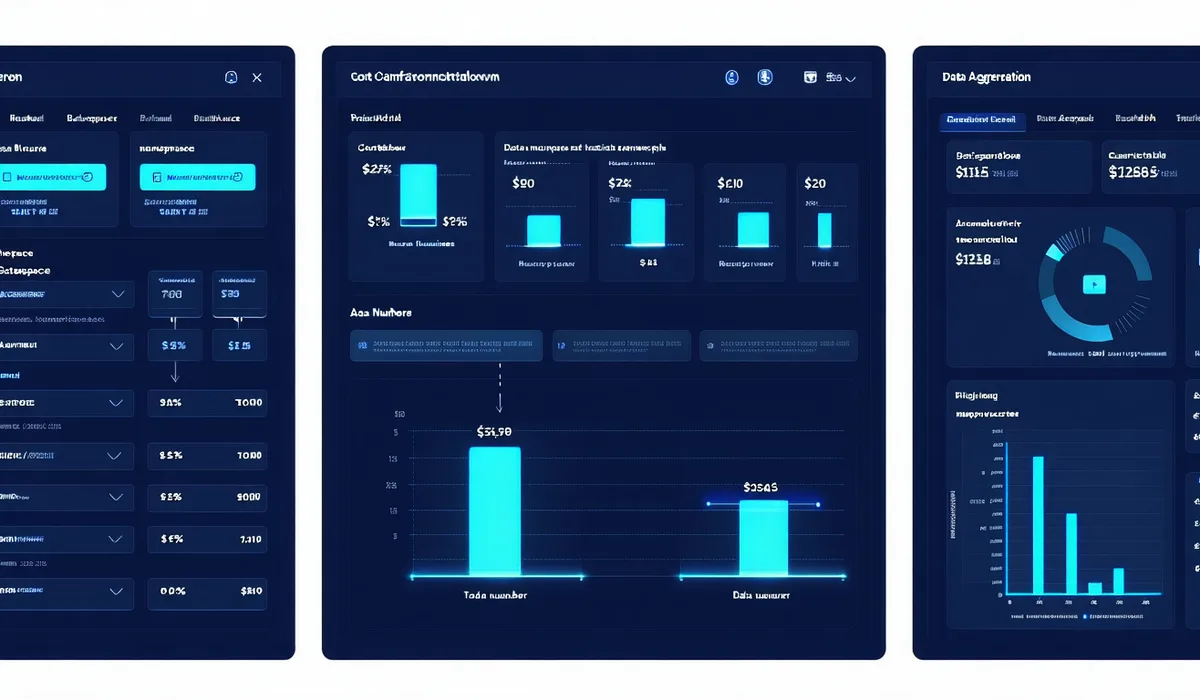
Cost breakdown at every level of the stack
The attribution model is single-source. The views are role-scoped. Platform engineers see cost per namespace and per Kubernetes workload. Engineering managers see cost per squad and per microservice with WoW deltas. CFOs see product-line accountability with coverage percentage. FinOpsVyn does not replace your cloud provider's billing console — it adds the team-ownership layer that the console cannot provide.
- Namespace and pod cost allocation for platform teams (EKS + GKE)
- Squad and service rollup with amortized RI + Savings Plan distribution
- Product-line showback for finance — coverage percentage visible
- Continuous attribution — not a monthly batch export
Zombie resource detection
Idle resources surface before the bill does
Resources with zero utilization for 14+ days. EC2 instances where peak CPU over the past 30 days never exceeded 15% — candidates for right-sizing to a smaller instance family. Detached EBS volumes left behind after instance termination. Unattached Elastic IPs billed at $0.005/hr. Application Load Balancers with zero healthy target registrations. Idle RDS Multi-AZ instances consuming standby costs with no active connections. Each zombie surfaces with the team that owns it — so the remediation decision goes to the right Slack channel, not a generic ops queue.
FinOpsVyn does not terminate instances or delete volumes automatically. Detection and attribution are ours. Cleanup decisions stay with your team.
Learn more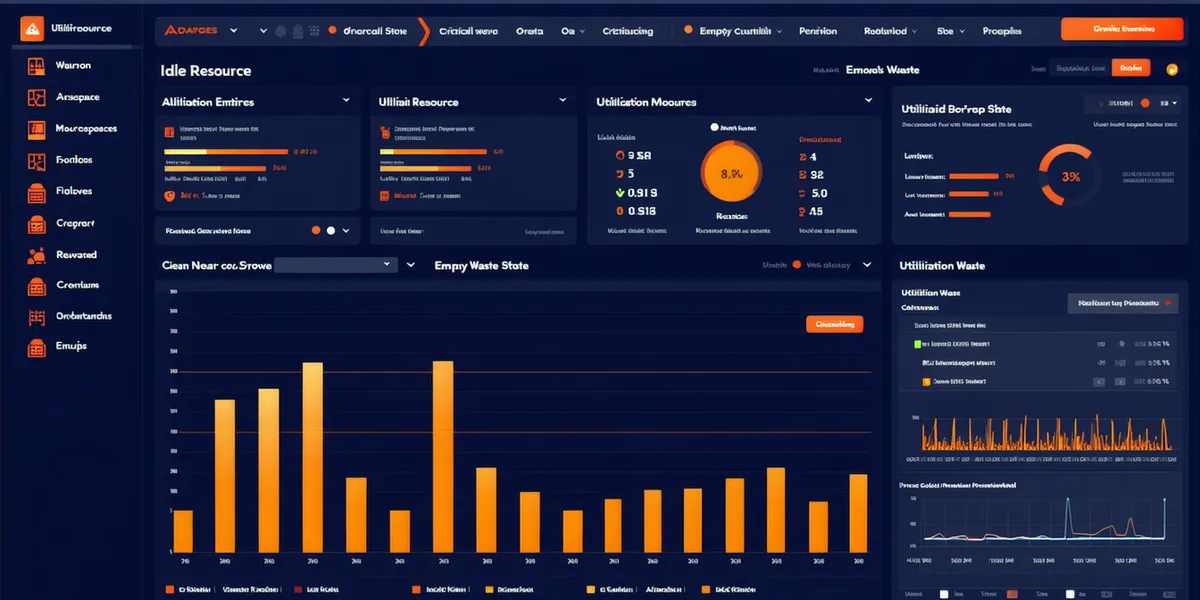
Integrations
Plugs into your existing stack
No new agents for core attribution. FinOpsVyn reads from billing APIs and enriches with ownership data from your infrastructure tooling.